Listen
discuss your concerns, goals and relevant health history
Bruxism & jaw function
Assessment and custom-made protection for teeth affected by grinding or clenching, with clear guidance for associated jaw symptoms and tooth wear.
Newtown Elite Dental
Level 1, 170A King Street, Newtown
16 years in Newtown
Could this help?
Bruxism is grinding or clenching that may happen unconsciously, particularly during sleep. Jaw symptoms can have different causes, so an assessment helps determine whether a custom splint, monitoring, advice, further investigation or referral is appropriate.
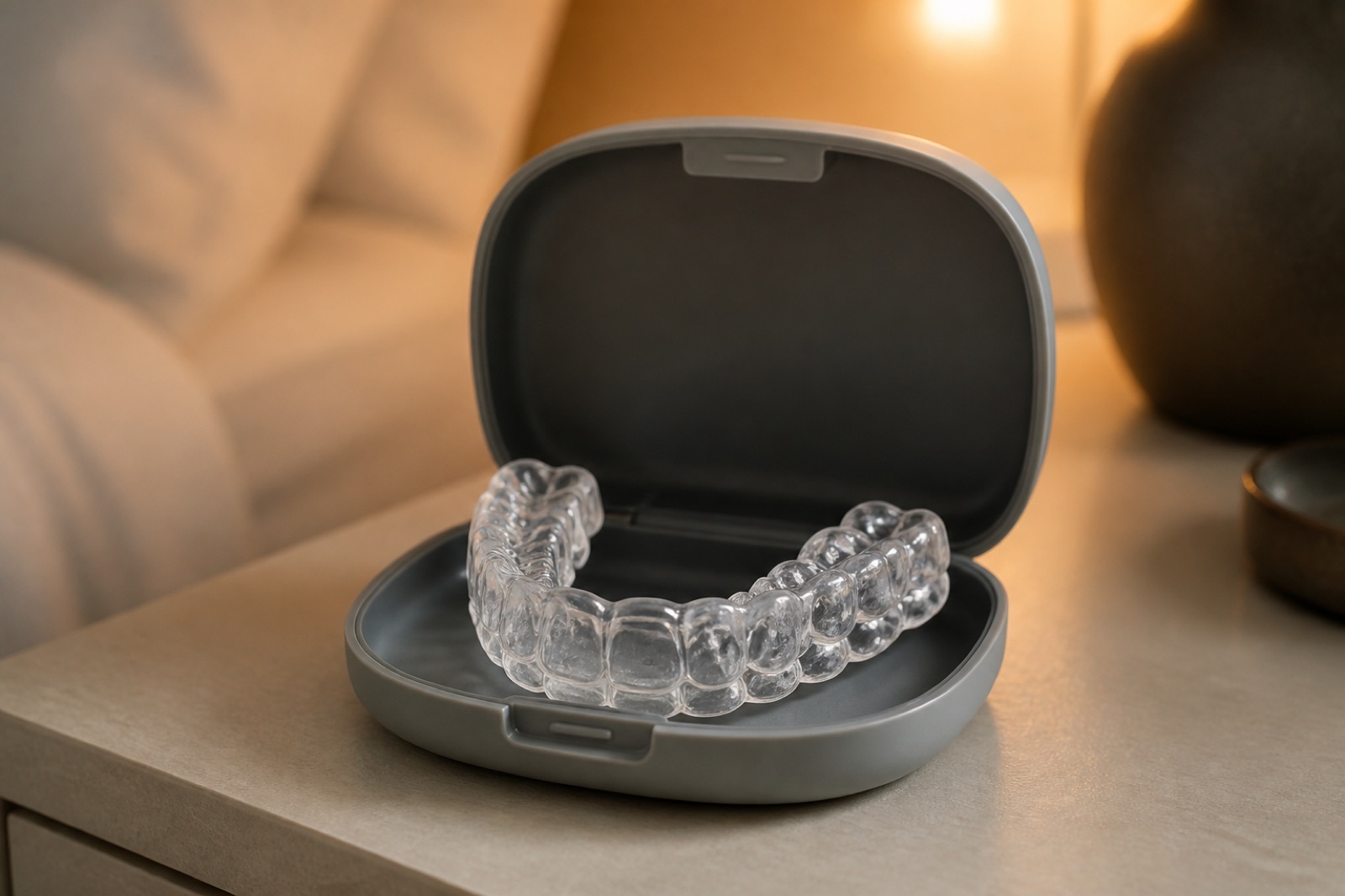
A custom splint is a removable appliance made from a scan or impression and adjusted to your teeth and bite. Worn during sleep where appropriate, it acts as a physical barrier between the teeth and may help protect against further wear or damage.
Personalised care
Custom splints are made from your dental records and clinically adjusted. Store-bought guards are not individually planned for your teeth, restorations or bite.
We discuss when symptoms occur and examine the teeth, restorations, bite, jaw movement and surrounding muscles. If a splint is suitable, a scan or impression is taken and the appliance is fitted at a later visit.
A splint can provide a protective barrier and may help manage selected symptoms, but it is not a universal treatment for every headache, clicking jaw or facial pain.
What to expect with Night Guards & Occlusal Splints
We assess the symptoms and bite first, then explain whether a custom splint, monitoring, advice or referral is appropriate.
discuss your concerns, goals and relevant health history
examine the teeth, gums, bite and surrounding structures
share the findings, suitable options and limitations clearly
agree on an appropriate sequence, timing and follow-up
Common questions
Clear information is part of good care. These answers are a starting point for your conversation.
Possible signs include worn or chipped teeth, repeated fractures, tight jaw muscles, morning headaches, facial discomfort or a partner hearing grinding at night. These signs can have other causes, so an assessment is important.
Not necessarily. A splint can help protect teeth and restorations and may help selected symptoms, but it does not guarantee that the underlying grinding or clenching habit will stop.
It may help selected patients, depending on the cause of the symptoms. Jaw pain, clicking, locking and headaches can have different causes, so we assess whether a splint, advice, monitoring, investigation or referral is appropriate.
We discuss your symptoms and relevant health history, then examine the teeth, restorations, bite, jaw movement and surrounding muscles. Scans, photographs or X-rays are recommended only when clinically appropriate.
A custom splint normally requires an assessment and dental records, followed by a separate fitting appointment after fabrication. We explain the expected timing when arranging your care.
Fees depend on the assessment, appliance and individual requirements. We explain the recommended option and associated costs before the splint is made.
Appointments in Newtown
Book online or call our team to arrange a jaw pain and splint assessment.