Listen
discuss your concerns, goals and relevant health history
Airway & orofacial health
Assessment and exercise-based therapy for selected patterns involving the tongue, lips, facial muscles, swallowing and oral rest posture.
Newtown Elite Dental
Level 1, 170A King Street, Newtown
16 years in Newtown
Could this help?
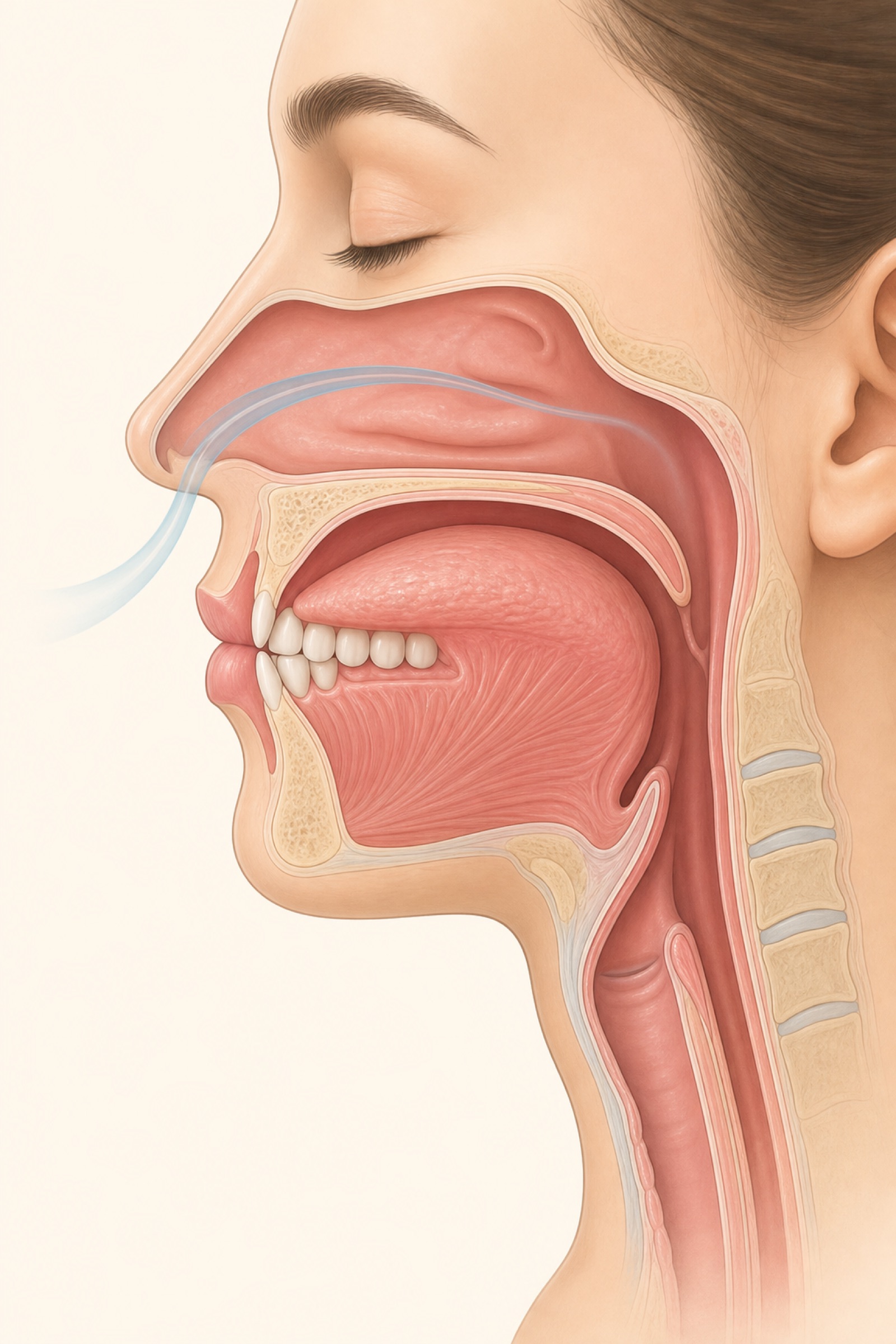
Orofacial myology focuses on how the tongue, lips, cheeks and related muscles rest and function. An assessment determines whether an exercise-based program, monitoring or coordination with another professional is appropriate.
Kristy O’Hara leads the EEDS program at Newtown Elite Dental. Care is tailored to the identified pattern, age, goals and ability to practise consistently.
Personalised care
Orofacial myology is not a standard exercise sheet for everyone. Some patients need exercises, some may benefit from an appliance, and others require monitoring or another clinician’s assessment.
Exercises generally take about five minutes and are completed two to three times daily. Reviews usually occur every two weeks. Children often complete around eight sessions, while adults may require longer care.
These are typical program details rather than guaranteed treatment lengths. Progress depends on the concern, participation, age, health factors and coordination with other care.
A chewing appliance may sometimes be used alongside exercises, but it is not automatically required. Recommendations depend on assessment findings and the person’s ability to follow the program.
What to expect with Orofacial Myology
We identify the functional pattern, agree on suitable goals and structure exercises, reviews and coordinated care around the individual.
discuss your concerns, goals and relevant health history
examine the teeth, gums, bite and surrounding structures
share the findings, suitable options and limitations clearly
agree on an appropriate sequence, timing and follow-up
Common questions
Clear information is part of good care. These answers are a starting point for your conversation.
Assessment may be relevant for tongue thrust, atypical swallowing, reduced lip seal, mouth-breathing patterns, tongue posture, persistent oral habits and support around selected orthodontic treatment.
It may be suitable for either, depending on the concern, health history, readiness and ability to practise consistently. The assessment determines whether the program is appropriate.
Exercises generally take about five minutes and are completed two to three times daily. The exact program is personalised and regular practice is important for progress.
Reviews usually occur every two weeks. Children often complete around eight sessions, while adults may require longer care. These are typical timeframes, not guaranteed treatment lengths.
Yes. Where appropriate, the program may be coordinated with orthodontic treatment. Speech pathology, ENT, dental or medical input may also be recommended depending on the findings.
Our team can explain the current assessment fee when you book. If a program, appliance or coordinated care is recommended, the expected sessions and fees are discussed before proceeding.
Appointments in Newtown
Book an orofacial myology assessment online or call our team if you would like to check whether this appointment is suitable.